Hogar

Castillo de Miramare

No salió tan bien. En 1864, él aceptó el trono de México —extraña elección, quizá inevitable— y fue ejecutado poco después. Carlota recibió la noticia y nunca se recuperó. Durante décadas vivió recluida, dividida entre este mundo y aquel al que no podía renunciar. Así que el castillo cambió de significado. Sigue pareciendo grandioso, pero se siente… distinto. Como si el aire supiera demasiado.

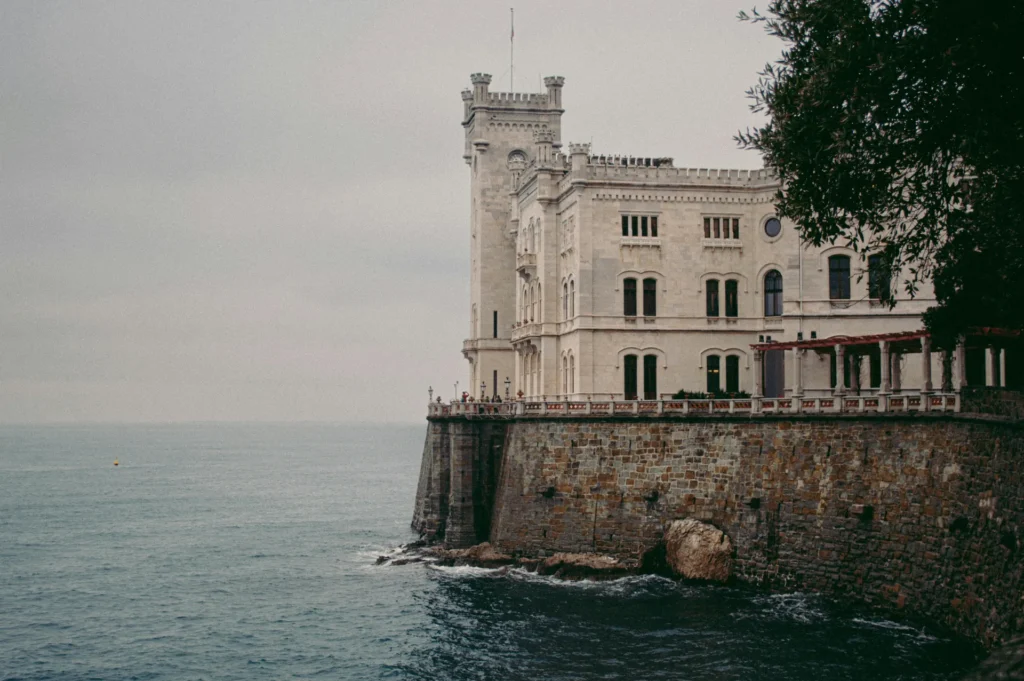
Miramare Castle facade view from the Gulf of Trieste
Miramare Castle overlooking the Adriatic Sea in Trieste, Italy, showcasing neoclassical architecture.
Miramare castle - near Trieste, Italy

Las Cocinas Históricas están abiertas de nuevo. En el sótano, cerca del pequeño puerto, las antiguas estufas y ollas de cobre han regresado tras su restauración. La sala huele a agua salada y piedra.

Los trabajos comenzarán la semana del 20 de octubre. Se instalará andamiaje alrededor de tres estatuas de madera en el lado norte de la Gran Escalera: pajes portadores de lámparas tallados hace siglos. Los trabajos se realizarán por las mañanas, excepto el miércoles 22, cuando no habrá acceso a esa zona.

La restauración propiamente dicha comenzará el 27 de octubre y se extenderá hasta noviembre. El personal redirigirá a los visitantes alrededor de la zona de trabajo. A medida que se termine cada estatua, se retirará el andamiaje.

No es lo ideal para los visitantes, pero no debería causar grandes interrupciones. Las estatuas necesitan atención, y así es como se hace.

Preguntas frecuentes

u003cstrongu003eWhere is Miramare Castle?u003c/strongu003e

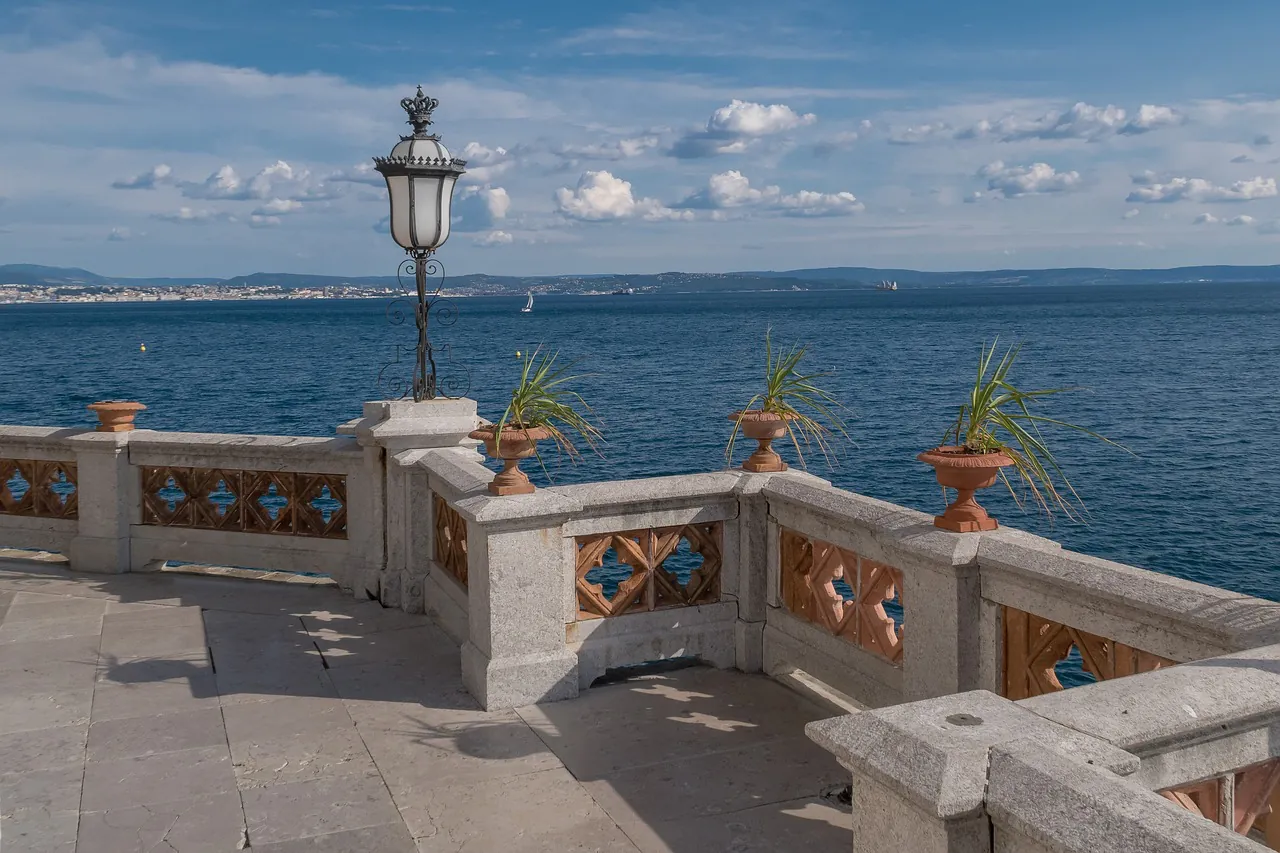
Miramare Castle sits on the promontory of Grignano, about 8 kilometers northwest of Trieste’s city center in northeastern Italy, right on the Gulf of Trieste. If you’re coming from the city center, you can take bus 6 heading to Miramare, get off at Grignano, and walk about 15 minutes through an underpass to reach the seaside path that leads to the castle. The location’s right there on the Adriatic, so you get the sea views Archduke Maximilian wanted—pretty much impossible to miss once you’re in the area.

u003cstrongu003eHow to Spell Miramareu003c/strongu003e?

It’s Miramare (not u0022Mira Mareu0022 or u0022Mira-Maru0022): one word. In Italian, it’s Castello di Miramare. The name actually comes from the Spanish phrase mirar el mar, which means u0022to look at the seau0022 so that basically tells you what Maximilian had in mind for the location.

u003cstrongu003eWhat is Miramare Castle Made Of?u003c/strongu003e

The castle is built from white Istrian limestone, which gives it that striking, elegant appearance that stands out against the sea and sky. Istrian stone comes from the region and was popular for construction because it’s durable and has that warm, luminous quality. The architectural details, including windows and roofs, used copper and brass for accents. So basically, it’s a solid stone structure meant to look impressive and last, not some decorative plaster facade.

u003cstrongu003eWho Was the Architect for Miramare Castle?u003c/strongu003e

Carl Junker (also listed as Karl Junker in some sources), an Austrian architect and engineer based in Vienna, designed the castle starting in 1856. Junker didn’t just hand over plans and disappear—he was involved in designing the 22-hectare park as well. The castle’s eclectic style blends Gothic, medieval, and Renaissance elements, which was on trend for the time but also reflected Maximilian’s own tastes and travels. Junker basically translated the Archduke’s vision into actual stone and mortar, and it took about four years to get the exterior done (1856-1860), though the interiors took longer.

u003cstrongu003eWhat’s inside Miramare Castle?u003c/strongu003e

People want to know what they’ll actually see—the 20+ rooms, the original furnishings, Maximilian’s bedroom designed like a ship’s cabin, the Throne Room, and how it’s all decorated. Read more on u003ca href=u0022https://miramarecastle.com/inside-miramare-castle/u0022 data-type=u0022pageu0022 data-id=u002274u0022u003eInside pageu003c/au003e.

u003cstrongu003eAre there any legends or ghost stories about Miramare Castle?u003c/strongu003e

The u0022curse of Miramareu0022 legend is fascinating to visitors—the idea that anyone who stayed there met a tragic end (Maximilian was executed, and later resident Duke Amadeo of Aosta died in captivity). People eat this stuff up.

u003cstrongu003eWhat’s the park like at Miramare?u003c/strongu003e

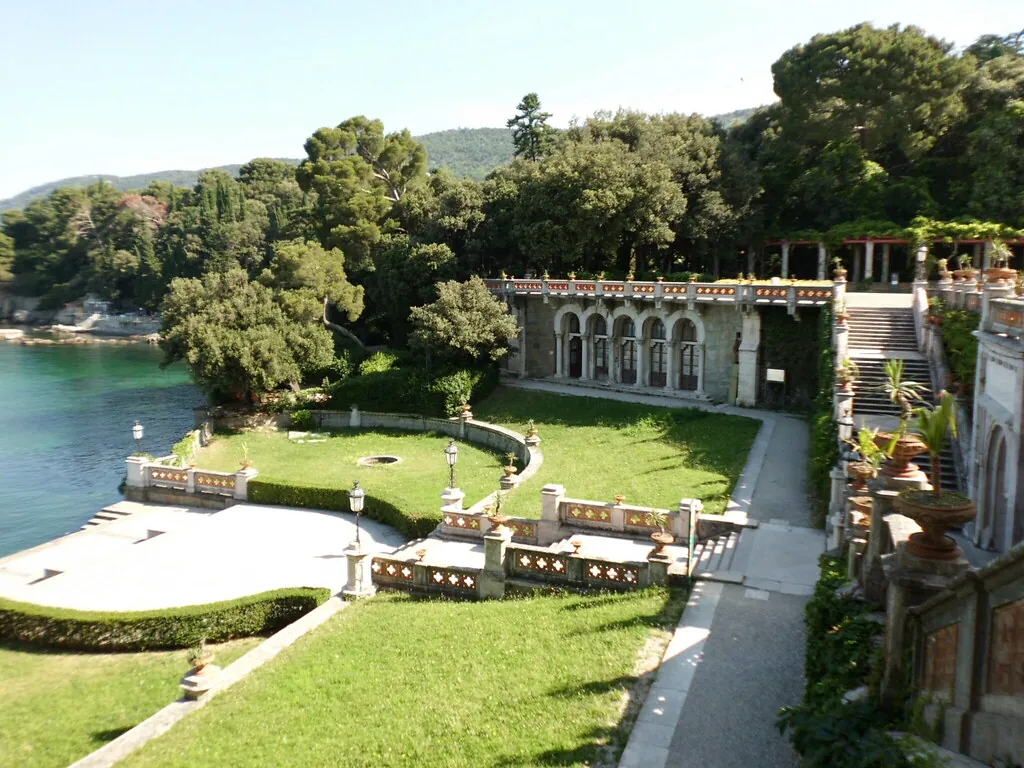
The botanical gardens are huge (22 hectares) and feature exotic plants Maximilian collected from his travels. Visitors want to know if it’s worth exploring beyond the castle itself. Read more on u003ca href=u0022https://miramarecastle.com/garden/u0022 data-type=u0022pageu0022 data-id=u002287u0022u003eGarden pageu003c/au003e.

u003cstrongu003eIs the castle wheelchair accessible?u003c/strongu003e

Yes, Miramare Castle in Trieste is largely wheelchair accessible, with ramps, a dedicated lift for the upper floors (they even lend out a courtesy wheelchair if needed), and paved paths in the park and gardens. You can drive right up to the entrance if you call ahead via the gate intercom, and free parking spots are reserved for disabled visitors. Just note that the elevator is a bit compact, and some outdoor spots might feel uneven due to the cliffside terrain.

u003cstrongu003eWhat’s the difference between the main castle and the Castelletto?u003c/strongu003e

The Castelletto is the smaller guest house on the grounds—visitors often wonder why there are two structures and what the history of the smaller one is.