So, Trieste.
It’s a city. A major seaport, actually, tucked away in Italy’s northeast corner, right up against Slovenia. As of whenever they last counted in 2025, the population is hovering around 198,668.
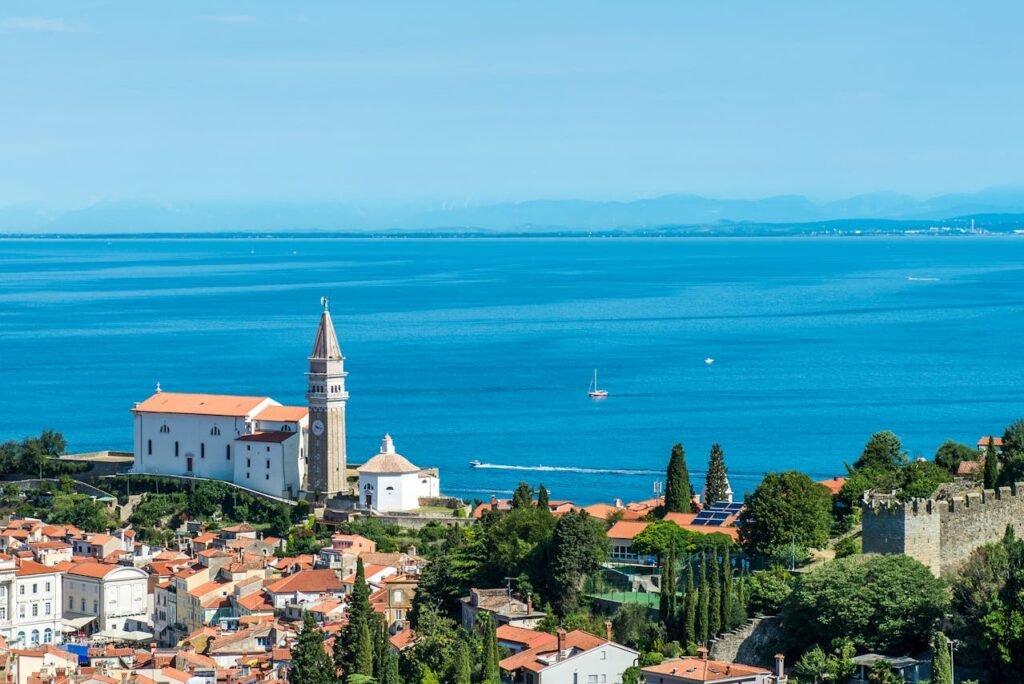
This place is a historical mashup. For centuries, it was the main port for the Austro-Hungarian Empire, its fourth-largest city after Vienna, Budapest, and Prague. That Austrian influence hasn’t really gone away; you see it in the architecture, feel it in the air. It only became part of Italy after the First World War. Because of its location, it’s always been a crossroads for Latin, Slavic, and Germanic cultures. This mix shows up in everything—the food, the street signs, the way people talk.
After WWII, things got tense. It was a hot spot between the East and West, even becoming a “Free Territory” for a bit before Italy officially took it back in 1954. Today, it’s packed with international research outfits and remains a huge port.
What’s there to see?
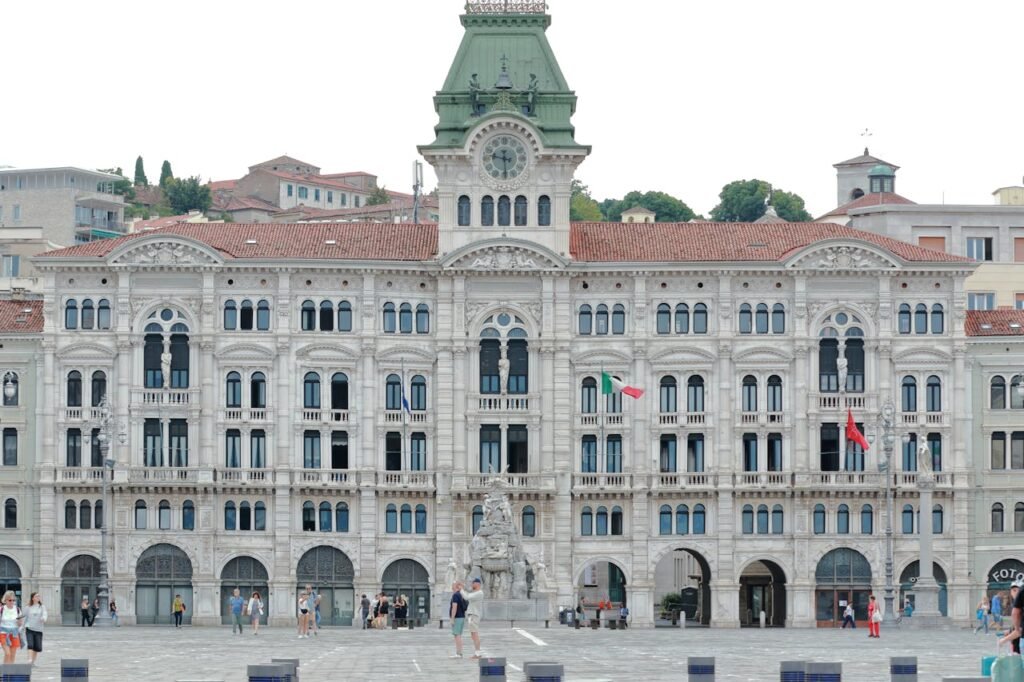
Well, there’s the Piazza Unità d’Italia, which is just a massive square right on the water. They say it’s one of the biggest in Europe that faces the sea. It’s lined with these grand, sort of Viennese-style buildings. Then you have remnants of its ancient past, like a Roman Theatre, and the medieval San Giusto Cathedral up on a hill.
Of course, there’s our castle, Miramare. It was built for Archduke Ferdinand Maximilian of Austria. He was the younger brother of Emperor Franz Joseph and picked this spot himself, supposedly after a storm forced him to shelter in the little Grignano harbor. He and his wife, Charlotte of Belgium, moved in before it was even finished. The whole castle and its huge park—full of exotic plants he brought back from his naval voyages—were his project.
The city has its quirks. The Bora, for one. It’s this ferocious wind that comes down from the plateau. It can hit speeds over 150 km/h and basically shapes life in the city. Some streets even have handrails to help people stay upright. When it blows, it’s intense, but afterwards, the air is unbelievably clear.
Trieste is also Italy’s coffee capital, or so they claim. The city’s history as a major coffee port for the Habsburg Empire cemented that. They even have their own slang for ordering coffee. A “nero” is an espresso, and a “capo” is a macchiato in a tiny glass.
Getting around is straightforward enough. The city center is walkable, though hilly in parts. An extensive bus network covers just about everywhere else, including the ride out to us at Miramare. You can buy tickets at newsstands or tobacco shops. Just remember to stamp them when you get on board.
It’s a different kind of Italian city. Less chaotic, maybe. More layered. You can probably see the main sights in 2 or 3 days. It’s a place with a complicated past and a weird, compelling atmosphere. Part Italian, part something else entirely.